
Alaska in winter is not a single northern-lights trip. It is a season of snow sports, festivals, clear cold days and long nights, and the middle of it, January and February, is busier and brighter than most visitors expect. This guide explains how daylight, cold and lodging shape each choice, so you can plan around the weather instead of hoping against it.
Table of Contents
Why do January and February suit a first winter visit?
Start with the light, because it drives everything else. January opens dark, but the days lengthen quickly: from about eight hours of light in early January to more than twelve by the end of February. That change matters for planning. Early in the month you have a short window for anything outdoors, while by late winter you can fit a full day of activity and still have a long evening for the sky.
Hard freezes bring long runs of blue-sky weather, and in those conditions Denali shows itself from Anchorage and Fairbanks about twice as often as it does in summer. A mountain that often hides in the warm months becomes one of the winter’s easiest views.
There is also a practical reason to choose these months. Off-season pricing can make the trip more affordable, and communities stay lively because nearly every weekend is anchored by a race or a festival. Deep winter can feel busier than summer, which is the opposite of what most people assume.
What can you actually do on snow?
The answer is nearly everything that works on snow, and the infrastructure is better than the dark months suggest. Cross-country and downhill ski areas reach full coverage in these months, and trails inside Anchorage and other towns fill with skiers, snow-bikers, joggers and skijoring enthusiasts.
Trails and skiing near Anchorage
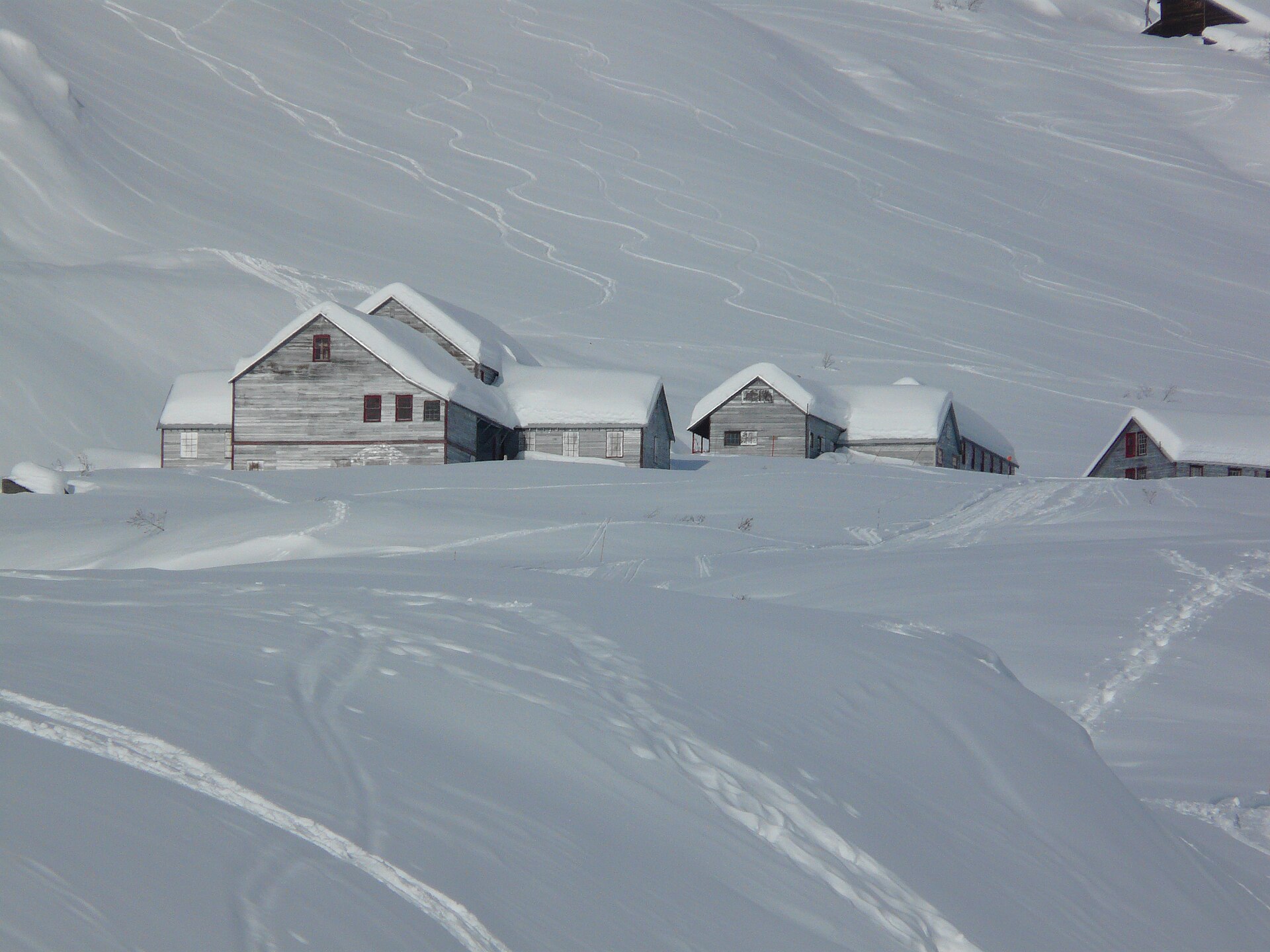
Anchorage maintains a trail system of more than 300 miles of packed or groomed routes, so you can walk, run, ski or ride a fat bike without leaving the city. Downhill options sit close by: Hilltop is in the city’s backyard, Alyeska Resort in Girdwood is about 45 minutes south, and Hatcher Pass, roughly 90 minutes north, has long drawn backcountry skiers. Skeetawk now opens that terrain to more people.
Dog mushing
Dog mushing is the state sport, and in these months it moves from wilderness trails to in-town loops. Many of the classic distance races take place in January and February, so a visit can overlap with one. If you want to try it yourself, book with an established local operator rather than improvising.
Guided walking and snowshoeing
If you prefer your own feet, guided snowshoe outings and winter hikes handle route-finding and gear questions for you.
How do you plan around the aurora and the clouds?
Treat the northern lights as a bonus layered on top of a good trip, not as the trip itself. Auroras are never guaranteed, and cloud can erase a clear forecast. Fairbanks is often dark and clear, which is why it is a favorite, but the lights can show as far south as Anchorage in any winter.
Two habits improve your odds. First, check an aurora forecast and keep your evenings flexible, so you can act when conditions line up. Second, get away from city lights. Near Anchorage, the Glen Alps parking lot is about a 20-minute drive from downtown, and a guided outing with a local photography company handles the where and the how.
Guided tours also solve the disappointment problem. Many operators build in a backup, such as dogsledding or a long day trip to the Arctic Circle, so a cloudy night still gives you something worth the cold. Sleeping somewhere that suits sky-watching helps too: remote lodges and cabins with large windows let you step out when the show begins instead of driving at midnight.
- Check the forecast daily and stay flexible.
- Leave town lights behind, or book a guide who will.
- Pair every aurora night with an activity that works under cloud.
What do you see for wildlife and local culture?
Be realistic here: winter is not the best season for most of Alaska’s famous animals. Moose are the exception. Deep snow pushes them into towns, and natural areas such as the Palmer Hay Flats and Potter Marsh concentrate them as well. Ravens gather in surprising numbers, sometimes half a dozen at once in a parking lot, and resident forest birds like chickadees and redpolls move through the trees.
If you want to see more species, the Alaska Zoo and the Alaska Wildlife Conservation Center show animals in their thick winter coats, which is a calm way to fill a cold afternoon.
Winter is festival season, and it builds toward the Anchorage Fur Rendezvous, a 10-day event that begins in late February and includes ice sculpting competitions, fireworks, live music and a world championship sprint sled dog race. Anchorage and Fairbanks also host a full range of concerts and performances, so evenings need not be spent waiting on the sky.
Where should you stay, and how should you dress?
Choose lodging by what you want to do at night. For aurora viewing, remote places make the biggest difference. One lodge in Gates of the Arctic National Park offers packages of 3 to 5 nights that include aurora viewing and dog mushing. Near Fairbanks, Borealis Basecamp has 20 private cabins with windows designed for watching the sky, and Snowhook Adventures at Hatcher Pass combines a dog sled ride, a snowmobile trip up the mountain and an evening aurora discussion.
If you would rather stay close to skiing, Girdwood puts a ski resort and a spa on the same doorstep. In Seward, cabin stays offer a quiet base near the water, and a lodge outside Anchorage near Eklutna Lake sits beside cross-country and fat-bike trails.
Dressing for it
Dress in layers, and let the outer layers do the heavy work: a warm parka with a hood, insulated boots, and a hat, buff and glove combination. Alaska’s low winter humidity can soften the bite of a given temperature, so it may feel milder than the same reading elsewhere. Winter sports may call for extra layers or specialized gear, which you can rent in Anchorage rather than buy for one trip.
One caution on getting around: the roads outside town can be icy and poorly maintained in winter, especially side roads. If you are heading to Fairbanks, taking the train or flying is the calmer choice over driving the highway yourself.
Related reading
- Five Highways That Explain Alaska: Seward, Glenn, Parks, Richardson, Denali
- Where We Sleep in Alaska: Cabins, Campgrounds, Lodges and Towns
Sources
- 15 Reasons to Visit Alaska in Winter Including Best Places … (curiositysavestravel.com, accessed 2026-11-09)
- Alaska in January & February | Best Things to Do Across… (alaska.org, accessed 2026-11-09)
- Where to Stay in Alaska in the Winter (alaska.org, accessed 2026-11-09)
Photo: Hatcher Pass in winter 2, by shirley binn from Bonsall, San Diego, CC BY 2.0 (Wikimedia Commons)
