
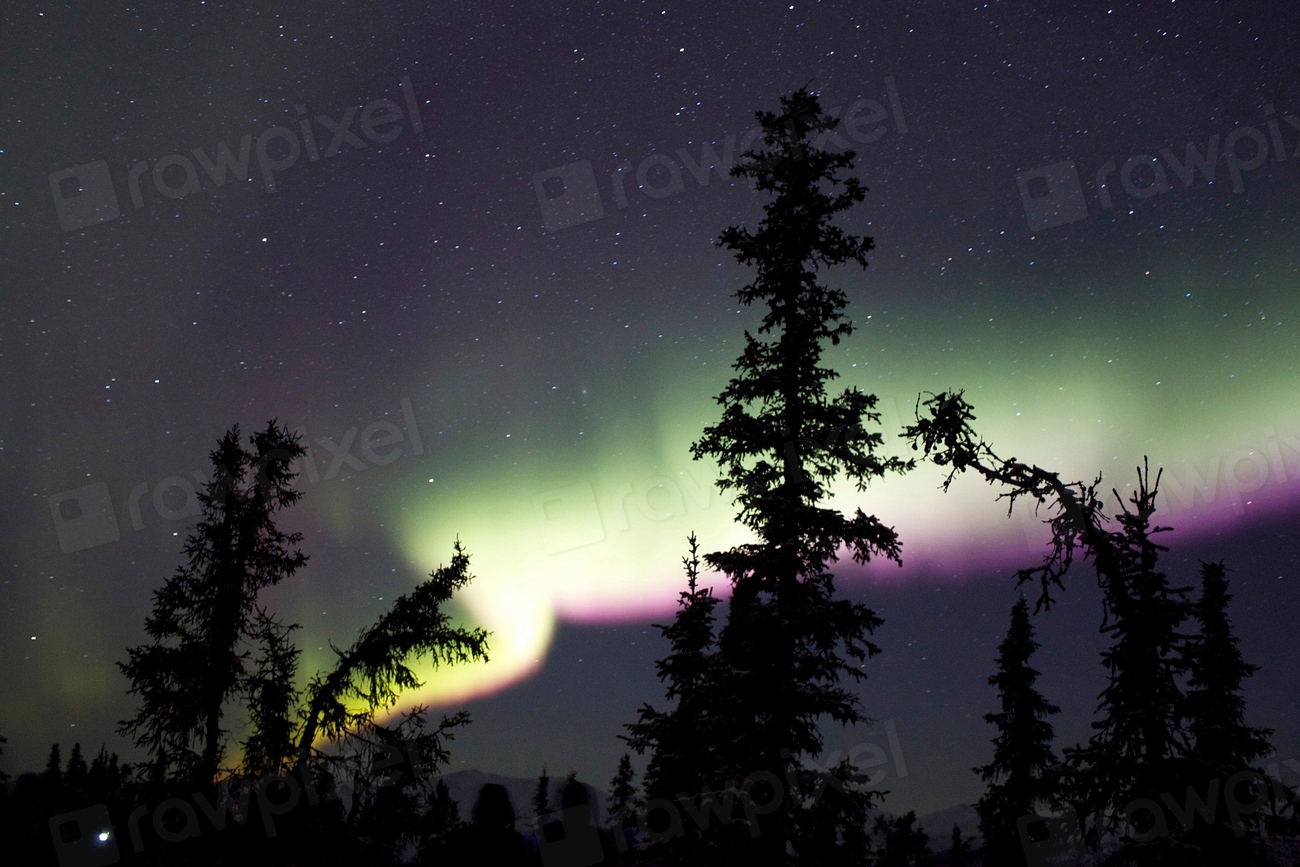
The aurora can be seen in Alaska from late August to late April, with the strongest overall window between September and March. Within that span, the best month for you depends on how you weigh darkness, cold, cloud and moonlight, and on which part of the state you stand in. This guide explains why each factor matters before it tells you how to plan around it.
Table of Contents
When does the aurora season actually start and end?
The aurora itself is not seasonal. Charged particles from the sun strike the upper atmosphere all year, high above the clouds. What changes is whether you can see it, and that comes down to how dark the sky gets. Around the summer solstice, Interior Alaska has almost no true night, so the display is simply drowned out by daylight.
That is why the viewing season is framed by the return of darkness. One Fairbanks guide service puts the window at roughly August 20 through April 20, with the peak between September and March. A guide in Yellowknife, Canada, gives a similar August-to-April frame for the same reason, and warns that planning an aurora trip for May, June or July is hoping for a rare event.
Think of the season as having a gentle front edge and a gentle back edge, with the deep winter in the middle. The edges are where the sky is darkest only for part of the night, so you trade a shorter viewing window for easier conditions on the ground.
Which month is best, and why do September and March deserve a look?
Deep winter, December through February, is the safest all-round pick. The nights are at their longest, and the cold, dry air tends to keep skies clear. Snow on the ground also reflects some of the glow back up, so the landscape picks up the color. If you can only choose one window and want the most consistent conditions, this is it.
The shoulder months make a strong case for themselves, though.
- September: darkness has returned, but it is the mildest aurora window in terms of temperature. You also get autumn color on the ground, which gives the trip a second reason to exist.
- March: the Fairbanks guide quoted above describes the geometry of Earth’s magnetic field around the equinox as funneling more solar wind toward the poles, which can produce intense storms. He calls March the month that often delivers the most colorful, active displays of the season.
The practical reading is that December and January are the most dependable, while September and March trade a little reliability for comfort or for a chance at a more dramatic show. If you dislike extreme cold, or you want a trip with more daylight activities built in, the shoulder months are a sensible choice rather than a compromise.
How do clouds, the Kp index and the moon interact?
Three conditions decide whether you see anything: solar activity, clear skies and dark skies. Weigh them in that order of practical importance, and you will make better choices about where to stand and when.
Solar activity and the Kp index
The Kp index measures geomagnetic disturbance on a scale of 0 to 9. In places that sit under the auroral oval, the ring-shaped zone where aurora activity concentrates, you can see displays at a low Kp of 1 or 2, which would be unusual farther south. Fairbanks, at about 65 degrees north, lies beneath that oval. The consequence is that you do not need to wait for a big storm; you need a clear night. A single app number is also a blunt tool, so treat forecasts from the University of Alaska Fairbanks Geophysical Institute or NOAA as guidance rather than a promise.
Clouds
Cloud is the factor most likely to ruin a night, because even a strong display is invisible behind a cloud deck. The Fairbanks guide notes that Interior Alaska’s continental climate produces more clear nights than coastal areas, and that Anchorage’s maritime weather brings persistent cloud far more often. A Churchill, Manitoba operator makes the same point from the other side: in summer, open water adds moisture to the air and more cloud, while the frozen water of February and March gives that region many clear nights.
The moon
The moon does not change the aurora; it changes your sky. A new moon gives the darkest background, which helps with faint displays. A bright moon over snow brightens the whole scene and can make a faint aurora harder to pick out, though it does not erase it. The Yellowknife guide suggests that a moon rising or setting partway through the night can give you both moonlit scenery and true starlight in one outing. Do not rearrange your dates around the lunar calendar; a clear night under the oval beats a perfect moon with cloud.
Why does the best place change between Fairbanks and the coast?
The sources here speak most directly about Fairbanks and the Interior, so the honest comparison is between that region and the maritime south. Fairbanks combines a position under the auroral oval, a dry continental climate and areas of low light pollution within a short drive. Coastal and south-central areas sit farther from the oval’s center of activity and have wetter weather, so cloud costs you more nights.
This does not mean the Mat-Su Valley or the Kenai Peninsula never produce a show. It means that on any given night your odds there depend more heavily on cloud and on a stronger geomagnetic disturbance. If you are basing yourself in those regions for other reasons, treat the aurora as a bonus and keep your expectations flexible, rather than building the whole trip around it.
Light pollution matters everywhere. City lights wash out all but the strongest displays, and the difference after even a half-hour drive into darker country is large. Whichever region you choose, pick a viewing spot with an open northern horizon and little artificial light, and be ready to move if clouds roll in.
How many nights should you plan, and what should you expect outside?
Because clear weather is the limiting factor, the most useful thing you can do is add nights. Treat those as one operator’s estimates rather than a guarantee, but the logic holds: each extra night is another independent chance at a clear sky.
Set realistic expectations about what you will see. Human eyes are poor at color in the dark, because the light-sensitive cells that work at night are far less sensitive to color. Greens show up most easily, while pinks, purples and deep reds may look faint or grayish to you even though a camera records them vividly. Expect a pale moving glow that sometimes brightens into something dramatic, not the saturated neon of promotional photos.
- Let your eyes adapt. Night vision takes somewhere between 15 and 45 minutes to develop fully, so give yourself time outside before judging the sky. Red light, such as a red headlamp mode, preserves it.
- Plan for cold you can stand. Interior winter nights can be severe, and March in the far north can still bring nights near minus 30 degrees Celsius. Dress for standing still, not for moving, and have a warm place to retreat to between watching sessions.
- Use your camera as a scout. A phone or camera can pick up an aurora before it is obvious to your eyes.
Stand-still cold is the real constraint on how long you can wait, so build in breaks rather than trying to endure a single long vigil.
Related reading
- Road, Rail, Ferry and Floatplane: How Alaska Actually Fits Together
- Where We Sleep in Alaska: Cabins, Campgrounds, Lodges and Towns
Sources
- Best Time to See Northern Lights in Alaska, by Month (facetheoutdoors.com, accessed 2026-11-09)
- Planning your visit — Sean Norman – Yellowknife Aurora … (seannorman.com, accessed 2026-11-09)
- How to View the Northern Lights in Summer (frontiersnorth.com, accessed 2026-11-09)
Photo: Aurora Borealis, Chena Hot Springs, by U.S. Forest Service (source), CC0 1.0 (Rawpixel, via Openverse)