
Where we sleep in Alaska decides what kind of trip we have. A night in a public-use cabin on a lake reached by floatplane and a night in a chain hotel by the Anchorage airport are both Alaska, but they are not the same Alaska. The state offers four broad kinds of bed – public cabins, campgrounds, lodges and roadhouses, and ordinary town lodging – and a good itinerary usually mixes them. Here is how each works, in general terms, and what it asks of us.
Table of Contents
Public-use cabins: the best-kept open secret
Scattered across the national forests, state parks and federal lands of Alaska are several hundred simple cabins that anyone can reserve. The Tongass National Forest in Southeast has around 150 of them; the Chugach around Prince William Sound and the Kenai has a few dozen more; the state park system and the Bureau of Land Management add their own. A typical cabin is a single room of logs or plywood with wooden bunks, a table, a wood or oil stove, and an outhouse. There is no electricity, no running water, and no bedding. Many come with a rowboat pulled up on the shore.
They are reserved online through the public reservation systems, months ahead for summer weekends and popular lakes. The nightly fee is modest, generally less than a campsite in a private campground in the Lower 48. What makes them special is access. Some sit beside a trail or a road; most are reached by boat, floatplane or a long walk, and the cost of getting there usually exceeds the cost of the cabin. We bring everything: sleeping pads and bags, stove fuel, water treatment, firewood or the means to cut it, and food stored in bear-resistant containers. In return we get a dry roof in the rainforest, a fire in the stove, and a lake to ourselves.
Campgrounds: from the road system to the tundra
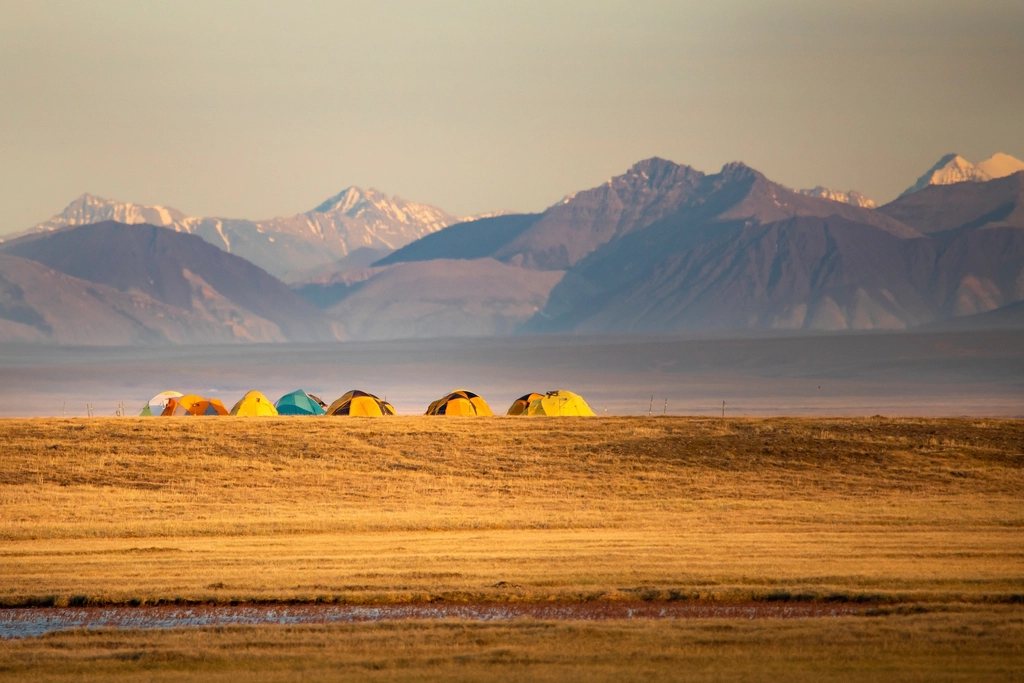
Alaska has more campgrounds than hotels, and most of them are public. State park campgrounds line the Kenai, the Glenn and the Parks highways with pit toilets, water pumps and fire rings; the national forests run similar sites around Seward, Whittier and the Kenai lakes; and Denali National Park has six campgrounds along its road, from the big one at the entrance to a walk-in site near Wonder Lake at mile 85 with the mountain filling the view. Municipal campgrounds in towns like Homer and Valdez put us on the waterfront for a few dollars. Private campgrounds add hookups, showers and laundry for road-trippers in campervans.
Beyond the developed sites, dispersed camping is allowed on most federal and state land, which is a great deal of Alaska. That freedom comes with responsibilities that the state takes seriously: camp well away from salmon streams and bear trails, cook and store food at least 100 yards (90 m) from the tent, and leave nothing. Some backcountry areas, including Denali, require food to be carried in approved bear-resistant canisters. Campgrounds along the main highways fill on July weekends; midweek and in May or September there is almost always room.
Lodges and roadhouses: the middle of nowhere, with dinner
The word lodge covers a wide range in Alaska. At one end is the roadhouse, a tradition older than the highways: a wooden inn at a river crossing or a pass with a few rooms, a bar, a pie counter and a gas pump, still running along the Richardson, the Glenn and the Denali Highway. At the other end is the fly-in wilderness lodge, reached only by floatplane, offering guided fishing or bear viewing, three meals and a sauna, at a price that reflects the fact that everything, including the cook, arrived by air.
Between them sit the cabin resorts and small inns of Talkeetna, Seward, Homer, McCarthy and the Denali entrance, with a handful of rooms or cabins, breakfast, and a host who knows the weather. These are the places where we have learned the most about Alaska over dinner. They book out for July by spring; May and September have room and better rates. For a remote lodge, we plan a minimum of three nights, since flights in and out eat the first and last days and weather can steal one more.
Towns: hotels, hostels, rentals and the airport night
Anchorage, Fairbanks and Juneau have the full range of ordinary lodging: hotels, motels, hostels, bed and breakfasts and short-term rentals. Summer rates in all three cities are high and rooms are scarce from mid-June to mid-August, when cruise and tour traffic peaks; the same room in October can cost half as much. Smaller towns follow the same pattern with fewer beds. Homer, Seward and Valdez are compact enough that a walkable rental near the harbor is often the best base, and most towns of any size have at least one hostel with bunks and a kitchen.
A practical detail: many trips begin or end with a late-night or early-morning flight, and the airport-area hotels in Anchorage exist for exactly that. There is no shame in a plain first night. We save the memorable beds for the middle.
Matching the bed to the trip
The mistake we see most often is booking the same kind of lodging every night. A mixed week might look like this.
- Two nights in a town at either end, for logistics, laundry and a proper meal.
- Three or four nights of campgrounds along the highways, moving every day or two.
- Two nights in a public-use cabin, with a boat or plane to reach it and a day to enjoy it.
- One night in a roadhouse or small inn where someone else cooks and the stories are free.
What every Alaska bed has in common
Whatever the roof, three rules travel with us. Book the scarce things early, which in summer means anything with a view or a boat. Carry an eye mask, because in June the sun is still up at eleven and back before four. And keep food and anything that smells out of the tent and out of the car’s open interior, because a bear that learns to associate people with dinner is a bear that will eventually be shot. Sleeping well in Alaska is mostly about respecting the place we are sleeping in.