
Most of Alaska cannot be reached by road. The highways form a thin loop through the middle and south of the state; everywhere else, from the Bering Sea to the Arctic Ocean and across the great river deltas of the west, is what Alaskans call the Bush. More than 200 communities live there, most of them Alaska Native villages of a few hundred people, connected to each other and to the cities by small planes, by boats in summer and by snowmachine trails in winter. Going there is more expensive, less predictable and, in our experience, the part we think about longest afterward.
Table of Contents
What the Bush is, and how it runs
The Bush runs on aircraft. Regional carriers fly jets and turboprops from Anchorage and Fairbanks to the hub towns, and from the hubs, small planes with six to nine seats make the rounds of the villages, carrying passengers, mail, groceries and the occasional sled dog. Because everything arrives by air or by the summer barge, a gallon of milk or fuel can cost two or three times the Anchorage price, and subsistence hunting and fishing are not a pastime but the food supply: whale, seal and walrus on the coasts, caribou and moose inland, salmon on the rivers, berries everywhere. Under the 1971 land claims settlement most of the land around villages belongs to Alaska Native corporations, and crossing it, camping on it or hunting on it requires their permission; visitors should ask at the village office before setting off anywhere on foot.
Utqiagvik: the top of the continent
Utqiagvik, called Barrow until the community voted to restore its Inupiaq name in 2016, is the northernmost town in the United States, at 71.3 degrees north on the shore of the Chukchi and Beaufort seas. It is home to about 4,500 people, the majority Inupiat, and a jet flight of around 90 minutes from Fairbanks over the Brooks Range. The sun sets in the third week of November and does not rise again until the third week of January, roughly 65 days of polar night; from about May 10 to early August it does not set at all. There are no trees, the ground is permafrost to a depth of more than 1,000 feet (300 m), and the beach is patrolled for polar bears.
What makes the trip is the culture. Utqiagvik is a whaling town, and the spring and fall bowhead hunts, conducted by crews in skin boats under a strict quota, are the center of the year. In June, after a successful spring season, the town holds Nalukataq, a festival of shared whale meat and the blanket toss, in which people are thrown high into the air from a walrus-skin blanket held by the crowd; visitors are welcome to watch, and to eat if invited. Beyond town, a gravel road runs about 12 miles (19 km) toward Point Barrow, the actual northern tip, past a whale-bone arch by the shore.
Nome: gold, dogs and three roads to nowhere
Nome sits on the south coast of the Seward Peninsula, facing the Bering Sea and, about 160 miles (260 km) beyond it, Russia. Gold was found on the beach in 1899, and within a year some 20,000 people were camped on the sand; the town of about 3,600 that remains has a front street of false-front buildings and a beach where a few people still work small dredges in summer. Every March it is the finish line of the roughly 1,000-mile (1,600 km) sled-dog race from Southcentral Alaska, and the burled-wood arch on Front Street is where the teams come in, at any hour, to a siren and a crowd in parkas.
Nome’s special gift is that it has roads. Three gravel highways leave town and end, respectively, at Council, Teller and the Kougarok River, some 230 miles (370 km) of driving in all through country that no other Bush community can show a visitor from a car seat: tundra, willow thickets, old dredges, hot springs, herds of musk oxen on the ridges, reindeer belonging to Native herders and, in June, bird life that brings watchers from around the world to look for Asian species that stray across the strait. The Inupiat communities of the peninsula are known for ivory and whalebone carving, and the town’s museum is a good place to see it.
Kotzebue and the Northwest Arctic
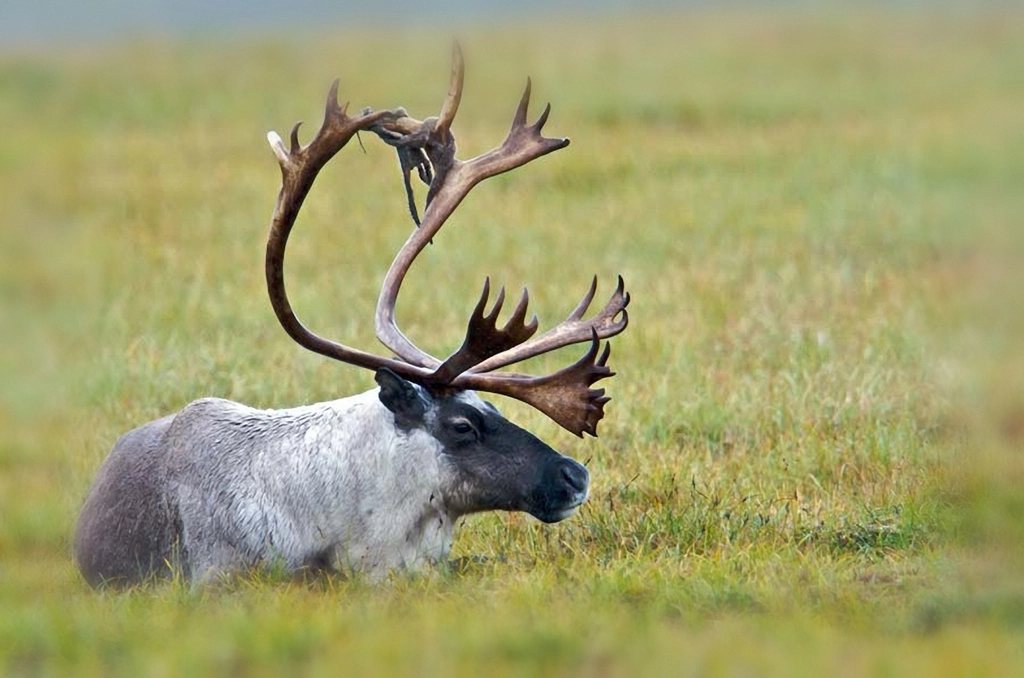
Kotzebue lies 26 miles (42 km) north of the Arctic Circle on a gravel spit at the mouth of three rivers, the Noatak, the Kobuk and the Selawik. The Inupiaq name is Qikiqtagruk, and the town of about 3,000 is the administrative and trading center of the Northwest Arctic. It is also the front door to a set of national parklands with almost no visitors: Kobuk Valley, with the Great Kobuk Sand Dunes, 25 square miles (65 sq km) of Sahara-looking sand north of the Arctic Circle; Cape Krusenstern, a coast of beach ridges holding 5,000 years of settlement; and the Noatak, one of the largest untouched river basins in North America. None of them have roads, campgrounds or trails; you fly in, are dropped on a gravel bar and are picked up on an agreed day. Twice a year the Western Arctic caribou herd, one of the largest in the world, crosses the Kobuk on its migration, and the villages along the river live by it.
The wider Arctic and the west
Farther east the Brooks Range rises above 8,000 feet (2,400 m) through Gates of the Arctic National Park, 8.4 million acres (3.4 million ha) with no road, no trail and one village, Anaktuvuk Pass, whose Nunamiut residents are the last of the inland caribou-hunting Inupiat. Beyond it the Arctic National Wildlife Refuge covers 19.6 million acres (7.9 million ha) to the Canadian border; its coastal village of Kaktovik has become known for the polar bears that gather on the beach in September and early October, and the small boat trips to see them are strictly regulated. To the southwest, Bethel on the Kuskokwim is the largest town in the Yup’ik world, hub for some 50 villages on the flat, lake-strewn Yukon-Kuskokwim Delta. Along the Aleutian chain and in the Pribilof Islands, Unangax communities live among fur seals and volcanoes, reached by air or, for the Aleutians, by a long summer ferry run from the Kenai Peninsula.
Going well: seasons, money, manners
Choose your season with care. June to August brings light, birds, festivals and hiking, along with mosquitoes and fog that can ground planes for days. March and April bring the return of the sun over sea ice, the races and the crispest light of the year, at 20 below. In any season, book flights with a spare day at each end, carry cash, and expect to pay Anchorage hotel prices for a simple room and much more for a bush charter. Above all, remember that you are a guest in someone’s home town. Ask before photographing people, houses, boats or drying racks; do not touch subsistence gear or walk into fish camps; and accept that the weather, not the schedule, decides when you leave. It is the same lesson the land has been teaching for ten thousand years.