
Alaska does not shut down in winter; it changes gear. Trails that were mud in September become fast, firm and silent by December, rivers turn into highways, and the sky, which never got dark in June, starts putting on the aurora. The catch is the cold. In Anchorage a winter day sits around 10 to 20 degrees Fahrenheit (minus 12 to minus 7 C), which is pleasant with the right coat. In Fairbanks and the Interior, minus 30 F (minus 34 C) is an ordinary week in January and minus 40 arrives most years. We have learned to love both, and the secret is less about toughness than about clothing, timing and knowing when to go inside.
Table of Contents
The season and the light
Snow that stays usually arrives in Anchorage in late October or November and lasts into April; in Fairbanks it comes earlier and leaves later. The dark is the other half of winter. On the shortest day Anchorage gets about five and a half hours of daylight and Fairbanks under four, but the low sun makes those hours golden, and twilight stretches long on either side. By late February the light returns fast, several minutes a day, and March is the finest month of all: deep snowpack, ten or more hours of sun, and temperatures creeping toward the teens and twenties. The aurora is visible from late August to mid-April whenever the sky is clear and dark, and the Interior, farther from coastal cloud, is the more reliable place to see it.
Fat biking: the trails come alive
Fat bikes, with tires 4 to 5 inches (10 to 13 cm) wide run at very low pressure, turned Alaskan winter into a cycling season. Anchorage has hundreds of miles of trails that are groomed or packed for winter, from the Tony Knowles Coastal Trail, about 11 miles (18 km) along the water, to the singletrack of the Hillside and the rolling loops of Kincaid Park on the western edge of the city. Fairbanks rides its rivers and sloughs. The etiquette is simple: ride only when the surface is firm enough that your tire leaves less than an inch of print, stay off groomed ski tracks, and yield to skiers and dog teams. At minus 20 and below the grease in hubs stiffens, batteries fade and brake cables freeze, so short loops close to a warm building are the rule. Each February a winter ultra sends riders, skiers and walkers along the historic sled-dog route for 350 or 1,000 miles (560 or 1,600 km), a reminder that the limit is mostly in the mind.
Skiing: Nordic country first
Alaska is a cross-country skiing state before anything else. Anchorage grooms more than 100 miles (160 km) of Nordic trails inside city limits, lit for the dark hours, and Fairbanks has a comparable system on its north side. Skate and classic tracks are set nightly through the season, and the fee, where there is one, is a modest annual pass. Downhill skiing is concentrated in Girdwood, about 40 miles (64 km) south of Anchorage, where a resort mountain rises from near sea level to about 3,900 feet (1,190 m) with views over Turnagain Arm, and at smaller community hills near Anchorage and Fairbanks. Backcountry skiing and splitboarding fill the passes of the Chugach and the Kenai Mountains, and Turnagain Pass, an hour south of the city, is the most-visited touring area in the state. Avalanche awareness is not optional there; a beacon, a probe, a shovel, an avalanche course and the daily forecast are the entry ticket.
Dog mushing: the old way to travel
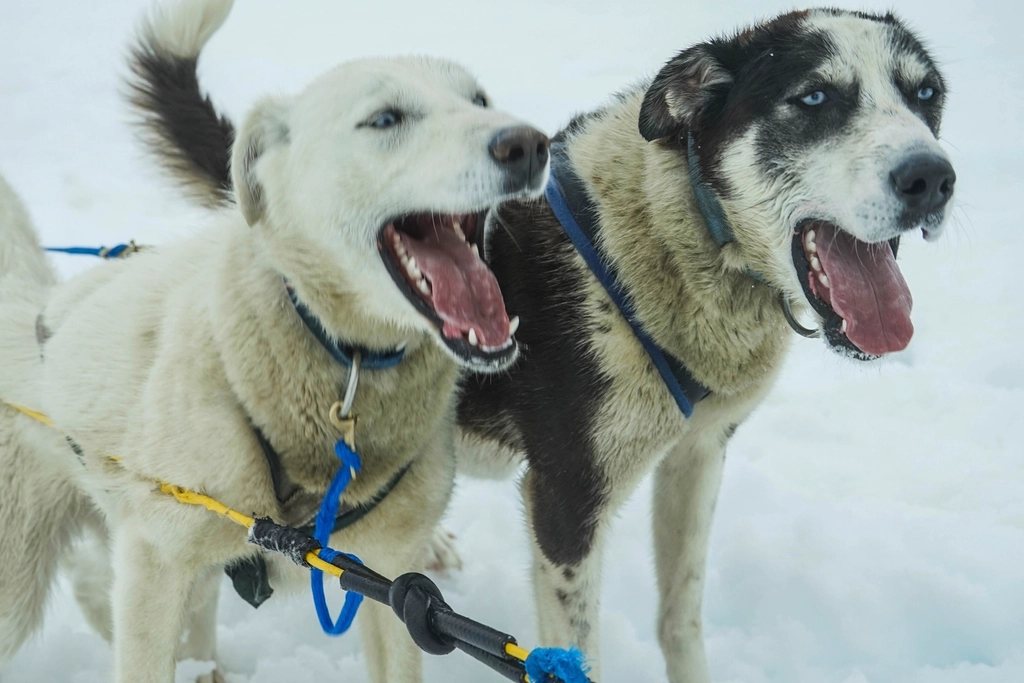
Before the snowmachine, the dog team was how the north moved in winter, and the sport remains woven into the state’s identity. The famous 1,000-mile (1,600 km) race from the Anchorage area to Nome starts on the first Saturday of March with a ceremonial run through downtown, and the Interior has its own long-distance race and dozens of shorter ones. For a visitor, the way in is a day with a working team: an hour or two on a sled behind eight or ten dogs on a frozen lake or a forest trail, or a multi-day trip where you learn to harness, to ride the runners and to shout “haw” and “gee” with conviction. Kennels operate throughout the Susitna Valley and around Fairbanks, and most welcome visitors by arrangement. The dogs are the point: lean, loud and desperate to run, and the silence once the team settles into its pace is one of the great sounds of the north.
Dressing for minus 30
Cold this deep is not a colder version of a New England January; it behaves differently. At minus 30 F with any wind, exposed skin freezes in ten to thirty minutes. Moisture is the enemy, because sweat that dampens a layer becomes ice against your body once you stop moving. The system that works, whatever the activity, is layers you can adjust before you sweat rather than after:
- Base layers of merino wool or synthetic, top and bottom, never cotton, which holds moisture and pulls heat out of you.
- One or two mid layers of fleece or light down that can be stripped off the moment you start to feel warm.
- A windproof shell, and for standing still or riding a sled a big insulated parka with a fur-ruffed hood that goes over everything.
- Insulated boots rated to minus 40 with room for thick wool socks, and vapor-barrier liners for long days; tight boots freeze toes.
- Mittens over thin liner gloves, so you can do fiddly tasks for a minute without baring skin; chemical warmers in the mitts.
- A warm hat, a neck gaiter or balaclava, and goggles when the wind blows, leaving no gap of skin between hood and face.
Move deliberately, eat and drink more than feels necessary, and check each other’s faces for the white waxy patches of frostnip on the nose and cheeks. Electronics and water bottles live inside the coat. Cars need a block heater plugged into an outlet overnight, and most parking lots in the Interior have them. Above all, keep the day short. The Alaskan winter afternoon is about tea in a warm room, and the sky will still be doing its show at ten.
Where to base and how to plan
For a first winter trip, Anchorage offers the widest choice with the mildest cold: groomed skiing, fat biking, a downhill mountain an hour away and dog kennels within an hour’s drive. Fairbanks is for the aurora, the deep cold and the mushing culture, with hot springs an hour out of town where the steam freezes in your hair. The rail line connects the two through the winter with a slower, scenic schedule, and the highway between them is about 360 miles (580 km) through Denali country with almost no services in places, so a full tank, a sleeping bag and a shovel ride in every winter vehicle. Costs are lower than summer, and the season is quiet in a way July never is. Come in March for the light, in January for the cold. Either way, the north rewards the well-dressed.